
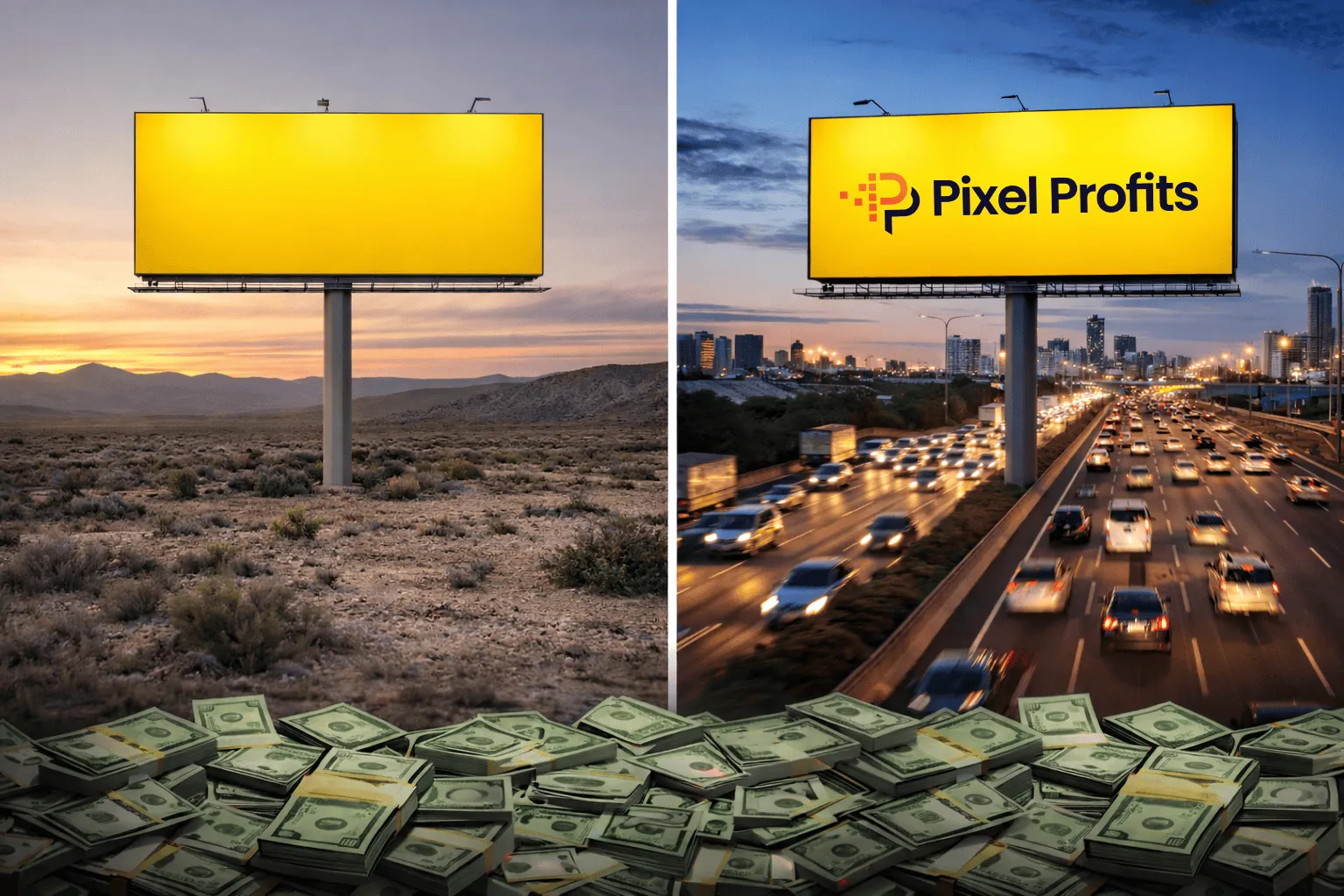
If you’ve been searching for a way to create professional graphics and visual content without hiring a designer or spending weeks learning complicated software, you’ve probably come across Pixel Profits in your research.
The promise sounds appealing: generate high-quality, monetizable graphics using AI — fast, easy, and beginner-friendly.
Read This Article: GramGenies Review: Buy or Skip in 2026?
In this Pixel Profits Review, I’m going to break down everything you need to know — what it is, who it’s best for, how it works, and whether it’s genuinely worth your hard-earned money. No fluff, no hype. Just an honest look at the product.

1. Product Overview
| Creator | James Renouf |
| Product | Pixel Profits |
| Launch Date | 2026-Feb-27 |
| Launch Time | 10:00 EST |
| Official Website | Click Here |
| Front End Price | $17 |
| Bonuses | Yes, Huge Software Bonuses |
| Skills | All Levels |
| Guarantee | 30 Days Money Back Guarantee |
| Niche | Graphics Design |
| Support | Effective Responses |
| Recommend | Highly Recommend! |
2. What Is Pixel Profits?

Pixel Profits is an AI-powered graphics creation platform designed to help users generate high-quality digital images, logos, social media graphics, and other visual assets — quickly and without any design experience.
The idea behind the product is straightforward: use artificial intelligence to handle the heavy lifting of design, so that everyday users (bloggers, marketers, freelancers, small business owners) can produce professional-looking visuals on demand.
What makes Pixel Profits stand out from generic design tools is its focus on monetization. The platform is positioned not just as a design tool, but as a way to create graphics that you can sell, use for clients, or repurpose across different platforms and business models.
In this Pixel Profits Review, I found it sits in the broader category of AI creative tools — similar in spirit to tools like Canva or MidJourney, but targeted more specifically at digital marketers and online entrepreneurs.
3. Who Is It For?

Pixel Profits is built with a specific audience in mind. It’s most useful for:
- Beginners and non-designers who need professional visuals without learning Photoshop or Illustrator
- Freelancers looking to offer graphic design services without being traditional designers
- Affiliate marketers and bloggers who need eye-catching images for their content
- Social media managers who publish visual content regularly
- Digital product sellers who want to create and sell graphics, templates, or visual assets
- Small business owners who can’t afford a dedicated designer
If you’re an experienced graphic designer already comfortable with professional tools, Pixel Profits probably won’t replace your existing workflow. But for everyone else — especially those just starting out — it could be a genuine time and money saver.
4. Main Features & Benefits
Here’s a breakdown of the core features included in Pixel Profits:
AI Image Generation The platform uses AI to generate custom images from text prompts. You describe what you want, and the system produces it. This is useful for creating unique visuals that don’t require stock photo licenses.
Pre-Built Templates Pixel Profits includes a library of done-for-you templates for common use cases — social media posts, banners, thumbnails, ads, and more. These speed up the creation process significantly.
Commercial License One of the biggest draws is the included commercial license. This means you can legally sell the graphics you create to clients or on marketplaces — a big deal if you’re looking to monetize the tool.
One-Click Customization Most elements can be adjusted with minimal clicks — colors, fonts, layouts, and sizing. The interface is designed to be intuitive even for complete beginners.
Multiple Export Formats You can export your designs in formats suited for print, web, and social media, giving you flexibility across different use cases.
Cloud-Based Platform Since Pixel Profits runs in the browser, there’s nothing to install. You can access it from any device with an internet connection.
5. How It Works

Getting started with Pixel Profits is fairly simple. Here’s how the typical workflow looks:
- Log in to your dashboard — After purchase, you get instant access to the cloud-based platform.
- Choose a template or start from scratch — Pick a category (social media, logo, banner, etc.) or enter a text prompt for the AI generator.
- Customize your design — Adjust colors, fonts, images, and layout using the drag-and-drop editor.
- Generate AI visuals — For unique images, type in a description and let the AI create the graphic for you.
- Export your file — Download in your preferred format (PNG, JPG, etc.).
- Use or sell — Use the graphics for your own projects or sell them to clients, as the commercial license permits.
The learning curve is minimal. Most users should be able to produce their first usable graphic within the first session.
6. Pros and Cons
No product is perfect. Here’s a balanced look at what Pixel Profits does well — and where it falls short.
Pros:
- Beginner-friendly with a low barrier to entry
- AI generation saves time and reduces creative block
- Commercial license included — great for freelancers
- Cloud-based — no installation required
- Templates make it faster to get professional results
- One-time pricing (as of this writing) — no recurring fees on the front-end
Cons:
- AI-generated images can sometimes be inconsistent or require re-prompting
- Advanced designers may find the customization options limited compared to professional tools
- The upsell funnel (OTOs) can feel overwhelming for new buyers
- Results depend heavily on how well you write your prompts — there’s a learning curve there
- Support quality and response times can vary
7. Pricing & OTOs
Based on available information, here’s how the Pixel Profits pricing structure breaks down:
Front-End (FE) — Core Product The main product is typically priced in the low-to-mid range (around $17–$27 as a one-time fee at launch). This gives you access to the core dashboard, templates, and AI generation features.
OTO 1 — Pro/Unlimited Upgrade This usually unlocks more templates, higher usage limits, or advanced AI features. Priced typically around $37–$47.
OTO 2 — DFY (Done-For-You) Pack Pre-made campaigns or graphic packs you can use or resell immediately. Typically $37–$67.
OTO 3 — Agency/Reseller License Allows you to sell Pixel Profits access to clients and keep the profit. Priced higher, usually $97–$197.
OTO 4 — White Label Lets you rebrand the platform under your own name. This is the top-tier offer, usually $197+.
Note: Prices and OTO structures can change, so always verify on the official sales page before buying.
The front-end purchase on its own is solid for personal use. If you plan to build a freelance or agency business around it, some of the upsells — particularly the agency license — may be worth considering.
7. My Personal Opinion
After reviewing Pixel Profits, my honest take is that it’s a decent tool with real use cases, particularly for beginners who are intimidated by traditional design software.
The combination of AI generation plus editable templates is genuinely useful. If you’re a blogger who needs thumbnails, a marketer who needs ad creatives, or someone looking to pick up freelance graphic work — Pixel Profits can legitimately help.
That said, it’s not magic. The AI output quality varies, and you’ll need to invest some time learning how to write good prompts to get the best results. It’s also not going to replace a skilled designer for complex, branded projects.
What I appreciate most in this Pixel Profits Review is the commercial license. The ability to create and sell graphics legally — right out of the box — adds real tangible value that many competing tools lock behind expensive plans.
Is it a get-rich-quick tool? No. But as part of a broader freelance or content creation workflow, it’s a worthwhile addition.
8. Is It Worth Buying?
Yes — with realistic expectations.
If you’re a beginner who needs professional graphics without the cost or time investment of learning design software, Pixel Profits offers genuine value at its front-end price point.
If you want to monetize graphic design services without a design background, the commercial license makes this a viable starting point.
However, if you’re expecting the AI to do everything for you without any learning or effort, you may be disappointed. Like any tool, you get out of it what you put in.
For the price, the front-end purchase is low-risk enough to try. Just be cautious about purchasing all the upsells immediately — assess the core product first before investing further.
9. Frequently Asked Questions
1. Do I need design experience to use Pixel Profits? No. The platform is specifically designed for beginners. Templates and AI tools handle most of the creative work.
2. Can I sell the graphics I create? Yes. The commercial license included with Pixel Profits allows you to sell graphics you create using the platform.
3. Is Pixel Profits a monthly subscription? As of the launch period, the front-end is a one-time payment. However, some upgrades (OTOs) may involve recurring fees — always check before purchasing.
4. What if the tool doesn’t work for me? Most product launches include a money-back guarantee (typically 30 days). Check the sales page for the exact refund policy before buying.
5. Is Pixel Profits suitable for professional graphic designers? It can be a useful addition to a professional’s toolkit for quick drafts or client mockups, but it won’t replace advanced tools like Adobe Illustrator for complex or highly branded work.
10. Final Thought
To wrap up this Pixel Profits Review: it’s a solid, beginner-oriented graphics tool that delivers on its core promise of making design accessible to non-designers. The AI features are genuinely useful, the commercial license adds real value, and the entry price is reasonable.
It’s not a miracle product, and the upsell structure can feel pushy. But the core tool works — and for the right user, it can save significant time and open up new income streams.
Recommended for: Beginners, content creators, marketers, and aspiring freelancers looking to add graphic design to their service offerings.